Digital marketing is how businesses reach customers through the internet. It sounds simple, but the term covers a huge range of strategies, channels, and tactics — and understanding how they fit together is the key to making smart marketing decisions.
What Is Digital Marketing?
Digital marketing is the promotion of products, services, or brands through digital channels — primarily search engines, websites, social media, email, and online advertising.
Unlike traditional marketing (print ads, billboards, TV commercials), digital marketing is measurable, targetable, and scalable. You can reach exactly the right audience, track every interaction, and adjust your strategy based on real data.
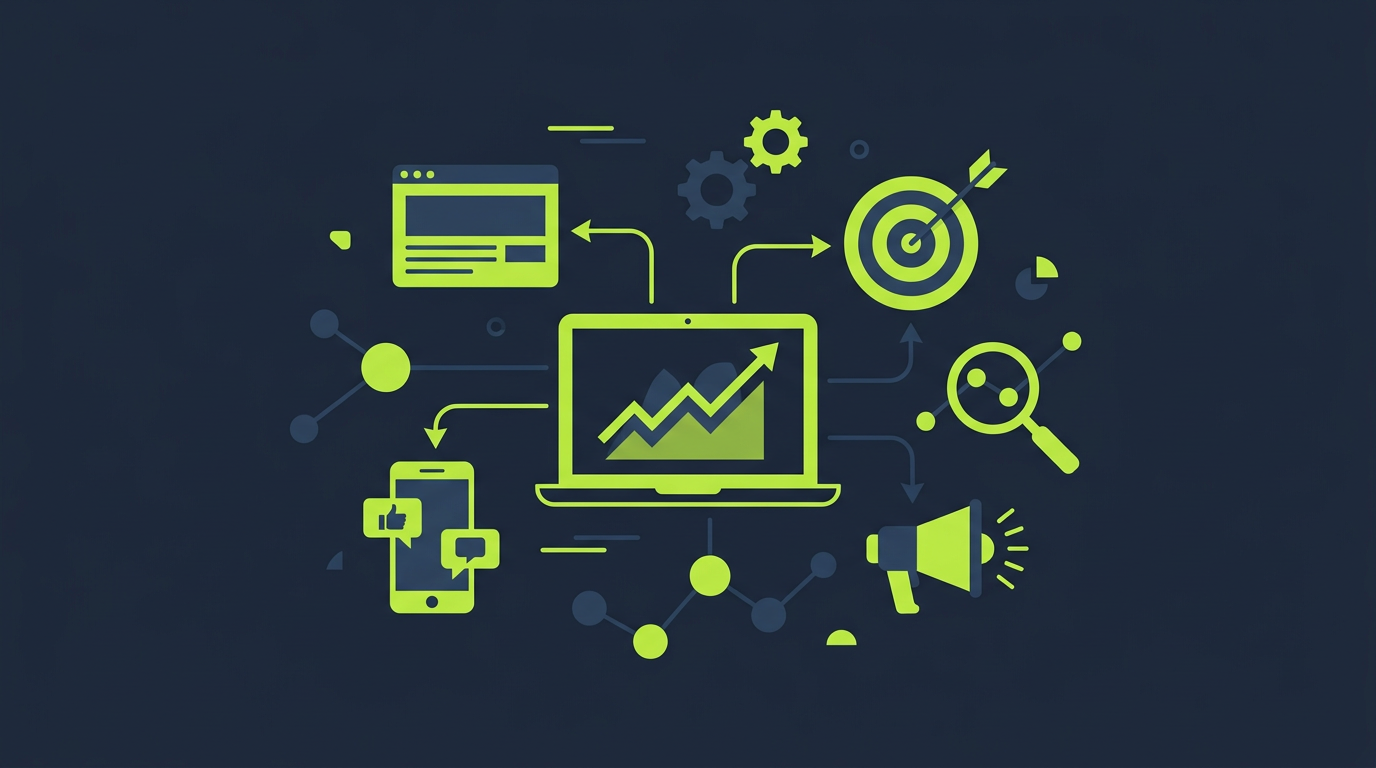
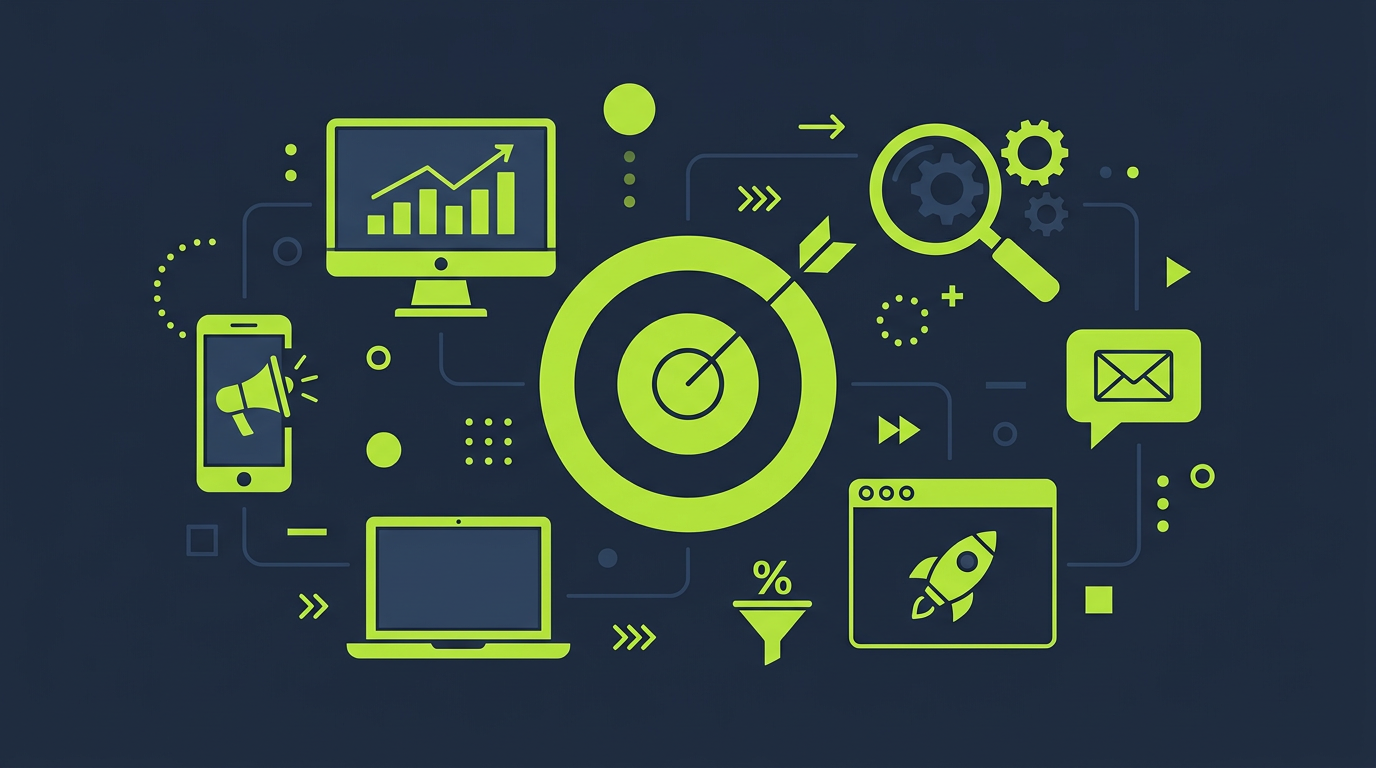
Digital marketing isn't one thing — it's a system of interconnected channels. The businesses that grow fastest are the ones that understand how these channels work together.
The Core Channels of Digital Marketing
1. Search Engine Optimization (SEO)
SEO is the process of optimizing your website to rank higher in organic (unpaid) search results. When someone searches for a product or service you offer, SEO determines whether they find you or your competitor.
Why it matters: Organic search drives the majority of website traffic for most businesses. Unlike paid ads, SEO traffic doesn't stop when you stop paying. Learn more in our complete SEO guide.
Best for: Long-term visibility, building authority, attracting high-intent traffic.
2. Pay-Per-Click Advertising (PPC)
PPC advertising — most commonly through Google Ads — puts your business at the top of search results instantly. You pay each time someone clicks your ad.
Why it matters: PPC delivers immediate visibility and traffic. It's highly measurable and you control exactly how much you spend. Read our guide on Google Ads budget planning.
Best for: Quick results, testing new markets, competitive keywords, promotions.
3. Content Marketing
Content marketing involves creating valuable, relevant content (blog posts, guides, videos, infographics) that attracts and engages your target audience.
Why it matters: Good content builds trust, supports SEO, and gives people reasons to visit your site and share it with others. The article you're reading right now is content marketing.
Best for: Building authority, supporting SEO, educating potential customers.
4. Email Marketing
Email marketing is one of the highest-ROI channels in digital marketing. It involves building a list of subscribers and sending them targeted messages — from welcome sequences to promotional campaigns. Check out our complete email marketing guide.
Why it matters: You own your email list (unlike social media followers). Email converts better than almost any other channel because your subscribers have already shown interest.
Best for: Nurturing leads, repeat purchases, customer retention, announcements.
5. Social Media Marketing
Social media marketing uses platforms like Instagram, LinkedIn, Facebook, and TikTok to build brand awareness, engage with audiences, and drive traffic.
Why it matters: Social media is where your customers spend their time. Even if it doesn't drive direct sales, it builds brand recognition and trust.
Best for: Brand awareness, community building, customer engagement, visual products.
How Digital Marketing Channels Work Together
The real power of digital marketing isn't in any single channel — it's in how they connect:
1. SEO + Content — Blog posts optimized for search bring in organic traffic
2. Content + Email — Visitors subscribe to your list through lead magnets on your content
3. Email + Sales — Email sequences nurture subscribers into customers
4. PPC + Landing Pages — Paid ads drive targeted traffic to conversion-optimized pages
5. Social + Content — Social media amplifies your content and builds brand awareness
This is what we call a marketing funnel — a system that moves strangers through awareness, consideration, and conversion.
Pro Tip: You don't need to be on every channel. Start with 2-3 channels that make sense for your business and audience, then expand once they're working.
Digital Marketing vs. Traditional Marketing
| Factor | Digital Marketing | Traditional Marketing |
|--------|------------------|----------------------|
| Cost | Scalable — start with any budget | High fixed costs (print, TV, radio) |
| Targeting | Precise — demographics, interests, intent | Broad — geographic or demographic |
| Measurability | Every click, view, and conversion tracked | Difficult to measure directly |
| Speed | Launch campaigns in hours | Weeks or months of lead time |
| Flexibility | Adjust in real-time based on data | Committed once published |
| Reach | Global or hyper-local | Typically local or regional |
How to Get Started With Digital Marketing
Step 1: Define Your Goals
What do you want to achieve? Common goals include:
Step 2: Know Your Audience
Who are your ideal customers? What do they search for? Where do they spend time online? The better you understand your audience, the more effective your marketing will be.
Step 3: Audit Your Current Presence
Before launching new campaigns, understand where you stand. A digital marketing audit reveals what's working, what's broken, and where the biggest opportunities are.
Step 4: Choose Your Channels
Based on your goals and audience, pick 2-3 channels to focus on. Don't try to do everything at once.
Step 5: Measure and Optimize
Track your results using tools like Google Analytics, Google Search Console, and your advertising platforms. Measuring ROI is essential — if you can't measure it, you can't improve it.
Common Digital Marketing Mistakes
1. Trying to be everywhere at once — Focus beats spread
2. Not tracking results — If you're not measuring, you're guessing
3. Ignoring mobile — Most traffic is mobile; your site must be fast and responsive
4. No clear strategy — Tactics without strategy is just noise
5. Expecting instant results — SEO and content take time; PPC delivers faster but costs money
How Apex Digital Approaches Digital Marketing
We build integrated digital marketing strategies that connect SEO, Google Ads, and website optimization into a cohesive growth system. Every channel supports the others, and everything is measured.
Ready to build a digital marketing strategy that actually works? Start with a free audit or book a strategy call to discuss your goals.
Free Website Audit Template
42-point checklist. Score your site.
Want us to implement this for you?
If you'd rather have experts handle your digital marketing strategy, we're here to help.
Book a Strategy CallApex Digital
Education-first digital marketing. Clear guides, real strategies.