Apex Digital
    Book a Strategy Call
    How to Build a Marketing Funnel That Actually Works
    Growth Systems

    How to Build a Marketing Funnel That Actually Works

    Most businesses skip the funnel and go straight to selling. Here's how to build a system that warms up strangers and turns them into customers — step by step.

    AD
    Apex Digital
    April 2026
    12 min read

    Most businesses treat marketing like a megaphone — blast a message and hope someone buys. But the most effective marketing works like a system: attracting strangers, building trust, and converting them into customers through a structured journey. That system is called a marketing funnel.

    What Is a Marketing Funnel?

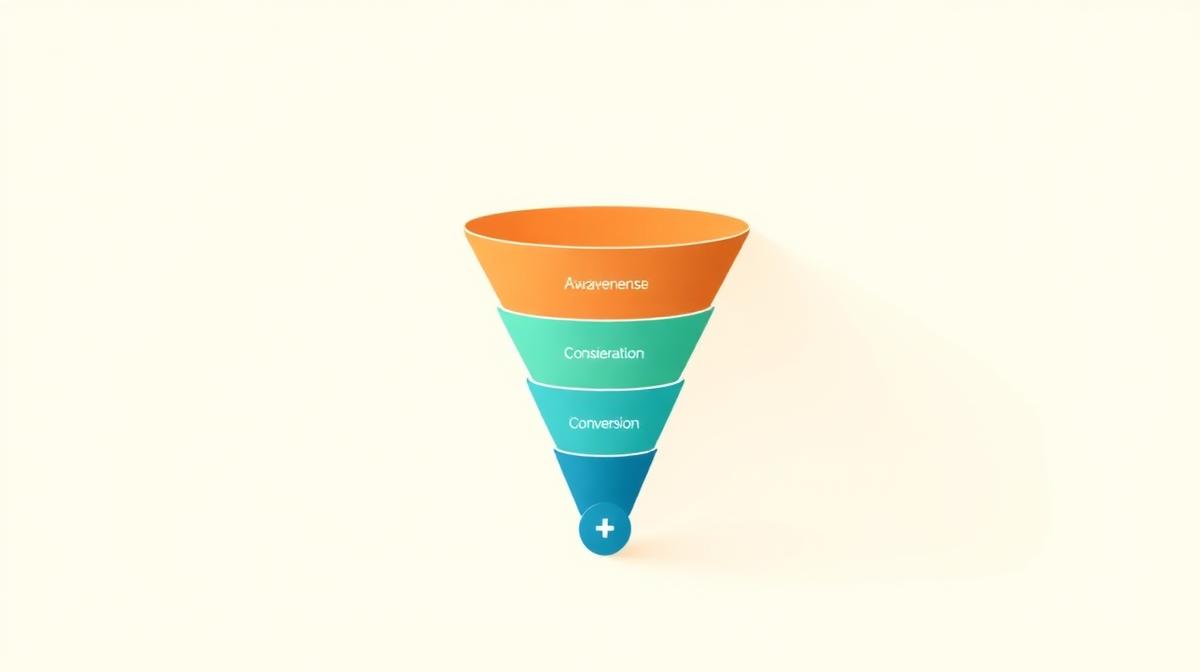
    A marketing funnel is a model that maps the journey a person takes from first discovering your business to becoming a paying customer. It's called a "funnel" because many people enter at the top, but only a fraction make it to the bottom and convert.

    Key Insight

    A funnel isn't a trick or a hack — it's simply a structured way of thinking about how people make buying decisions. Every business has a funnel, whether they've designed one intentionally or not.

    The Three Stages of a Funnel

    Top of Funnel (TOFU) — Awareness

    At this stage, people don't know your business exists. Your goal is to get in front of them with valuable content that addresses their problems.

    Tactics:

  1. Blog posts and educational content (like what you're reading now)
  2. Social media content
  3. SEO and organic search traffic
  4. Google Ads for brand awareness
  5. YouTube videos and podcasts
  6. Guest posts on industry sites
  7. Content types: How-to guides, industry insights, educational videos, infographics

    💡 Tip

    Top-of-funnel content should educate, not sell. If your first interaction with a potential customer is a sales pitch, you'll lose them. Lead with value.

    Middle of Funnel (MOFU) — Consideration

    People know you exist and are evaluating whether you can help them. Your goal is to build trust and demonstrate expertise.

    Tactics:

  8. Email sequences (nurture campaigns)
  9. Case studies and success stories
  10. Webinars and workshops
  11. Detailed comparison guides
  12. Free tools and calculators
  13. In-depth guides like our keyword research guide
  14. Content types: Case studies, testimonials, product comparisons, detailed tutorials

    Bottom of Funnel (BOFU) — Decision

    People are ready to buy and choosing between you and alternatives. Your goal is to make the decision easy.

    Tactics:

  15. Free consultations or strategy calls
  16. Digital audits and assessments
  17. Proposals and custom pricing
  18. Testimonials and social proof
  19. Limited-time offers
  20. Clear, compelling CTAs
  21. Content types: Consultation pages, pricing guides, ROI calculators, client testimonials

    Step 1: Define Your Ideal Customer

    Before building a funnel, you need to know exactly who you're targeting.

    Questions to Answer

  22. What problem does your ideal customer have?
  23. What have they already tried?
  24. Where do they spend time online?
  25. What would make them choose you over a competitor?
  26. What's their biggest objection to buying?
  27. ⚠️ Common Mistake

    Many businesses build funnels for "everyone." A funnel that targets everyone converts no one. The more specific your ideal customer profile, the more effective your funnel will be.

    Step 2: Map Your Customer Journey

    Walk through the journey from your customer's perspective:

  28. How do they first discover you? (Search, social, referral, ads)
  29. What do they do next? (Read a blog post, browse your site, follow on social)
  30. What builds their trust? (Case studies, reviews, educational content)
  31. What triggers the purchase? (A specific need, a promotion, a recommendation)
  32. What's the friction? (Unclear pricing, too many steps, lack of trust)
  33. Map It Visually

    Create a simple diagram:

  34. Discovery → First visit → Email signup → Nurture emails → Sales page → Purchase
  35. Or: Google search → Blog post → Related article → Service page → Contact form
  36. Step 3: Create Content for Each Stage

    TOFU Content Strategy

    Write blog posts that answer questions your ideal customers are asking:

  37. "What is SEO?" → Links to our comprehensive guide
  38. "Why isn't my website generating leads?" → Links to our traffic article
  39. "SEO vs Google Ads — which is better?" → Links to our comparison
  40. MOFU Content Strategy

    Create content that demonstrates your expertise:

  41. Case studies showing specific results
  42. Comparison guides (your approach vs. alternatives)
  43. Email sequences that educate and build relationship
  44. Webinars addressing specific challenges
  45. BOFU Content Strategy

    Make it easy for ready-to-buy prospects to take action:

  46. Clear service pages with pricing transparency
  47. Free consultation or audit offers
  48. Strong testimonials near CTAs
  49. Risk-reducing guarantees
  50. Step 4: Build Your Lead Capture System

    A funnel without lead capture is just a content library. You need mechanisms to collect contact information so you can nurture leads over time.

    Lead Magnets That Work

  51. Checklists — "The Complete SEO Audit Checklist"
  52. Templates — "Google Ads Campaign Setup Template"
  53. Guides — "The Small Business Digital Marketing Playbook"
  54. Free tools — ROI calculators, keyword analyzers
  55. Free audits — Like our digital marketing audit
  56. Lead Capture Best Practices

  57. Offer genuine value (not just a disguised sales pitch)
  58. Keep forms short (name + email is usually enough)
  59. Place opt-ins where readers are most engaged
  60. Use specific, benefit-driven CTAs
  61. Follow up immediately with the promised content
  62. Key Insight

    The best lead magnets solve a specific problem quickly. "Free Marketing Guide" is vague and uninspiring. "The 5-Minute Website Audit Checklist That Finds Hidden Revenue" is specific and valuable.

    Step 5: Set Up Email Nurturing

    Email is the engine of your funnel. It's how you maintain the relationship between first visit and purchase.

    Welcome Sequence (First 5–7 Emails)

  63. Email 1: Deliver the lead magnet + introduce yourself
  64. Email 2: Share your best educational content
  65. Email 3: Tell a client success story
  66. Email 4: Address the biggest objection
  67. Email 5: Soft CTA (free consultation, audit)
  68. Email 6: Share more educational content
  69. Email 7: Direct CTA with urgency
  70. Ongoing Nurture

  71. Weekly or bi-weekly educational emails
  72. New blog posts and guides
  73. Industry news and insights
  74. Occasional promotions (no more than 20% of emails)
  75. 💡 Tip

    The 80/20 rule applies to email marketing: 80% educational value, 20% promotional. If every email is a pitch, people unsubscribe. If every email teaches something, people buy.

    Step 6: Optimize Your Conversion Points

    Every funnel has "conversion points" — moments where you ask the visitor to take the next step. Optimize each one.

    Key Conversion Points

  76. Blog post → Email signup
  77. Email → Click to service page
  78. Service page → Contact form submission
  79. Consultation → Proposal acceptance
  80. How to Optimize

  81. A/B test CTAs, headlines, and offers
  82. Remove friction (fewer form fields, clearer instructions)
  83. Add urgency where genuine (limited availability, seasonal offers)
  84. Use social proof at decision points
  85. Make the next step crystal clear
  86. Read our guide on how to build a website that converts for detailed conversion optimization strategies.

    Step 7: Measure and Improve

    A funnel is never "done." Measure performance at each stage and identify bottlenecks.

    Key Metrics by Stage

  87. TOFU: Traffic, new visitors, social reach, content engagement
  88. MOFU: Email subscribers, email open rates, click rates, content downloads
  89. BOFU: Leads generated, conversion rate, cost per lead, sales revenue
  90. Finding Bottlenecks

  91. Lots of traffic but no email signups? → Improve lead magnet or opt-in placement
  92. Good email list but nobody clicks? → Improve email content and CTAs
  93. Leads come in but don't convert? → Improve sales process or offer
  94. High conversion rate but low traffic? → Invest in SEO or Google Ads
  95. Common Funnel Mistakes

  96. No nurturing — Going straight from awareness to sales pitch
  97. Too complicated — Start simple and add complexity as you learn
  98. No measurement — If you can't track it, you can't improve it
  99. Ignoring mobile — Most traffic is mobile; your funnel must work on phones
  100. One-size-fits-all — Different customer segments need different journeys
  101. ⚠️ Common Mistake

    The biggest funnel mistake is building it and forgetting it. Funnels require ongoing optimization. Set aside time monthly to review metrics, test new ideas, and refine each stage.

    How Apex Digital Builds Funnels

    We help businesses design and implement complete marketing funnels — from content strategy and lead magnets to email sequences and conversion optimization. Our approach combines SEO for sustainable traffic, Google Ads for immediate results, and conversion-focused web design.

    Ready to build a marketing funnel for your business? Book a strategy call to discuss your goals, or start with a digital marketing audit to understand where your current funnel is leaking.

    Free Website Audit Template

    42-point checklist. Score your site.

    Need help?

    Want us to implement this for you?

    If you'd rather have experts handle your digital marketing strategy, we're here to help.

    Book a Strategy Call
    AD

    Apex Digital

    Education-first digital marketing. Clear guides, real strategies.
    Stay ahead of the curve

    Weekly marketing tips. No fluff.

    Unsubscribe anytime. We respect your privacy.

    Let's turn your website into a client-generating system.

    Book a free strategy call and let's map out how to grow your digital presence.

    Book a Strategy Call

    We use cookies for essential website functionality and analytics to improve your experience. Read our Cookie Policy and Privacy Policy for more details.