You get a lead through your website. You jot down the name on a Post-it. Two days later, someone calls — you scramble to remember who they are. A week passes. The lead goes cold. They signed with your competitor.
Sound familiar? This is the reality for thousands of small businesses every single day. Not because they don't care, but because they don't have a system.
That's where a CRM comes in.
What Is a CRM, Really?
CRM stands for Customer Relationship Management. But forget the corporate definition for a second. In plain English, a CRM is a tool that keeps track of every person who has ever shown interest in your business — and helps you turn that interest into money.
Think of it as a digital notebook that never forgets. It remembers when someone contacted you, what they asked about, which emails you sent, when you need to follow up, and where they are in the process of becoming a client.
The Real Problem: Most business owners are great at their craft. They're terrible at managing leads. A CRM bridges that gap.
Why Spreadsheets and Notebooks Don't Work
Let's be honest. You've tried the spreadsheet approach. Maybe even a notes app on your phone. Here's why it always falls apart:
No Reminders, No Follow-Up
A spreadsheet doesn't ping you at 9 AM saying "Call Maria back — she asked for a quote three days ago." Without prompts, follow-ups get forgotten. And forgotten follow-ups are lost clients.
No Visibility
When a lead comes in, who handles it? What happened last? Is this person ready to buy or still browsing? With scattered notes and spreadsheets, nobody knows the full picture.
No History
Six months from now, a past lead reaches out again. Without a CRM, you have zero context. With one, you know exactly what they wanted, what you quoted, and why they didn't sign.
What a CRM Actually Does for You
1. Captures Every Lead Automatically
When someone fills out a form on your website, calls your business, or sends a message — it lands directly in your CRM. No copy-pasting. No "I'll add it later." Every lead is accounted for.
2. Organizes Your Pipeline
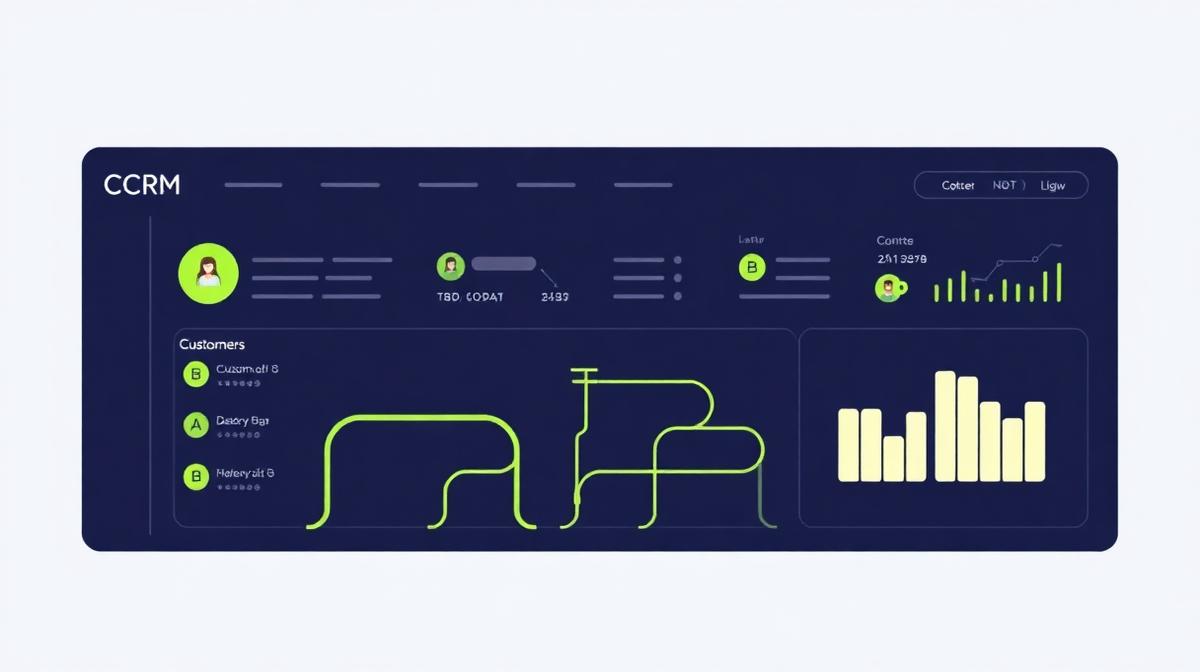
A CRM gives you a visual pipeline — stages like "New Lead," "Contacted," "Proposal Sent," "Won," "Lost." At a glance, you see exactly where every potential client stands. No guesswork.
3. Automates Follow-Ups
This is where it gets powerful. You can set rules: if a lead hasn't responded in 48 hours, send a follow-up email automatically. If a proposal was sent but not signed after a week, trigger a reminder. The system works while you sleep.
4. Keeps Your Team Aligned
If you have a team — even a small one — a CRM ensures everyone sees the same information. No more "I thought you were handling that" conversations. Every interaction is logged.
5. Shows You What's Working
How many leads came in this month? Where did they come from? How many converted? A CRM tracks all of this. So instead of guessing what's working, you know.
Real-World Example
Let's say you run a renovation company on the Costa Blanca. You get about 20 leads per month from your website and Google Ads combined.
Without a CRM: You respond to the first few quickly, but by mid-week you're on-site doing actual work. Five leads go unanswered for days. Three of those sign with someone else. You never even realize what you lost.
With a CRM: Every lead is captured automatically. The ones you can't call today get an automated "thank you" email with your portfolio. You get a daily reminder of who needs follow-up. Your close rate jumps from 15% to 35% — not because you changed your service, but because you stopped dropping the ball.
You don't need more leads. You need to stop losing the ones you already have.
"But I'm Too Small for a CRM"
This is the most common objection. And it's the most wrong.
A solo freelancer with 10 leads per month benefits MORE from a CRM than a corporation with a sales team of 50. Why? Because the freelancer has no safety net. Every missed follow-up is directly lost revenue.
A CRM doesn't require a big team. It replaces the team you can't afford.
How CRM Connects to Everything Else
Here's what most people miss: a CRM isn't an isolated tool. It's the backbone of your entire business system.
When these pieces connect, you stop running a chaotic business and start running a machine.
What to Look for in a CRM
You don't need enterprise software with 500 features. For most small businesses, the essentials are:
The best CRM is the one your team will actually use. Simplicity beats features every time.
The Bottom Line
A CRM isn't a luxury. It's not just for big companies. It's a fundamental tool that prevents you from losing money on leads you already earned.
If you're getting leads but not converting them, the problem isn't your marketing. The problem is what happens after the lead comes in.
Ready to stop losing leads? Start with a free digital audit to see where your system is breaking — or book a strategy call to build one that works.
Free Website Audit Template
42-point checklist. Score your site.
Want us to implement this for you?
If you'd rather have experts handle your digital marketing strategy, we're here to help.
Book a Strategy CallApex Digital
Education-first digital marketing. Clear guides, real strategies.