Apex Digital
    Book a Strategy Call
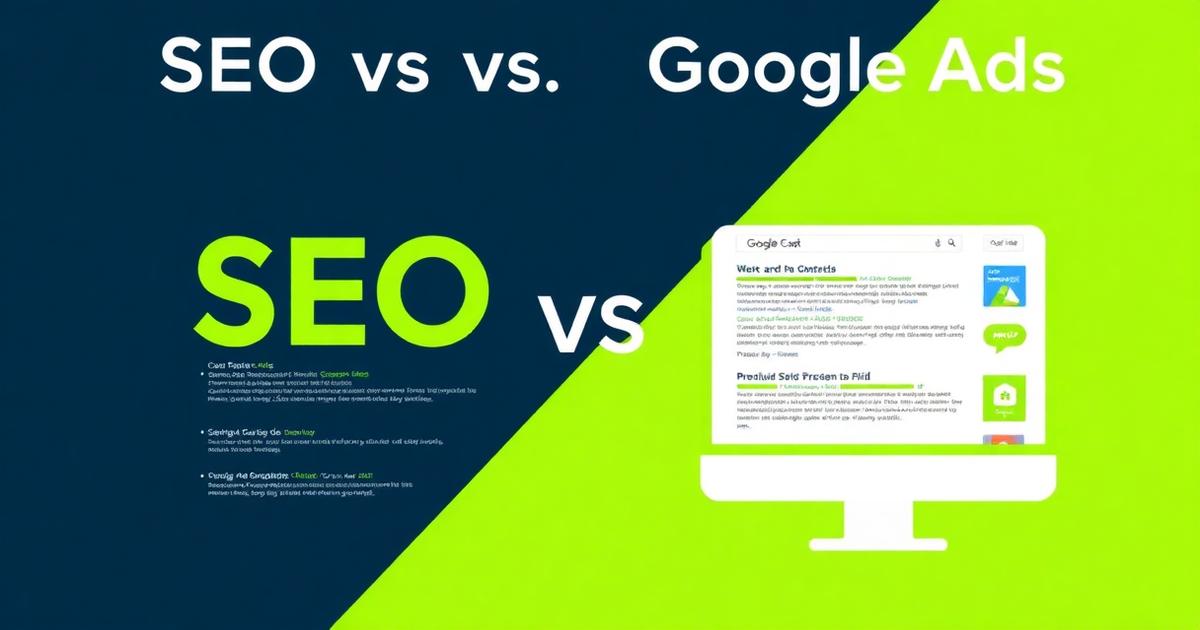
    SEO vs Google Ads: Which One Should You Choose?
    Digital Marketing Basics

    SEO vs Google Ads: Which One Should You Choose?

    Should you invest in organic SEO or paid Google Ads? This in-depth guide breaks down costs, timelines, ROI, and the smartest strategy for growth.

    AD
    Apex Digital
    April 2026
    10 min read

    Every business that wants to grow online faces the same question: should you invest in SEO or Google Ads? It's one of the most common — and most misunderstood — decisions in digital marketing.

    The short answer? It depends on your goals, timeline, and budget. The real answer? The fastest-growing businesses use both. But understanding how each works, when to use them, and how they complement each other is essential to making the right investment.

    This guide will break down everything you need to know about SEO vs Google Ads — so you can make an informed decision and stop wasting money on the wrong strategy.

    What Is SEO?

    Search Engine Optimization (SEO) is the process of optimizing your website so it ranks higher in organic (unpaid) search results on Google and other search engines.

    When someone searches for "web design agency in Spain" or "how to improve website conversions," SEO determines which websites appear at the top — without paying for each click.

    SEO involves:

  1. Technical optimization — site speed, mobile-friendliness, crawlability, structured data
  2. On-page optimization — keyword strategy, meta tags, heading structure, content quality
  3. Off-page optimization — backlinks, domain authority, brand mentions
  4. Content strategy — creating valuable content that answers search queries and builds authority
  5. For a deeper dive into how SEO works, read our complete guide: What is SEO and how does it work?

    Key Insight

    SEO is about earning visibility. You're building an asset that generates traffic over time — without paying for each visitor.

    What Is Google Ads?

    Google Ads (formerly Google AdWords) is a pay-per-click (PPC) advertising platform that lets you place ads at the top of Google search results, on YouTube, across the Google Display Network, and more.

    You bid on keywords relevant to your business. When someone searches for those keywords, your ad appears above the organic results. You pay only when someone clicks.

    Google Ads includes:

  6. Search campaigns — text ads that appear in Google search results
  7. Display campaigns — visual ads shown across millions of websites
  8. Shopping campaigns — product-focused ads for e-commerce
  9. Video campaigns — ads on YouTube
  10. Performance Max — automated campaigns across all Google channels
  11. Learn more about how we manage campaigns on our Google Ads services page.

    💡 Tip

    Google Ads isn't just an advertising tool — it's one of the best market research tools available. The data you collect from paid campaigns reveals exactly which keywords, messages, and offers resonate with your audience.

    Key Differences: SEO vs Google Ads

    Understanding the fundamental differences helps you decide which strategy fits your situation:

    Cost Structure:

  12. SEO requires an upfront investment in optimization and content, but once you rank, traffic is essentially free
  13. Google Ads charges per click — you pay every time someone visits your site
  14. Timeline:

  15. SEO takes 3–6 months for meaningful results, and 6–12 months for significant impact
  16. Google Ads delivers results within days of launching a campaign
  17. Longevity:

  18. SEO results compound over time and persist even if you pause investment
  19. Google Ads traffic stops immediately when you stop paying
  20. Trust Factor:

  21. Organic results receive higher click-through rates — users trust them more
  22. Ads are labeled as "Sponsored," which some users skip
  23. Control:

  24. With Google Ads, you control exactly when, where, and to whom your ads appear
  25. With SEO, you influence rankings but Google's algorithm makes the final decision
  26. Key Insight

    SEO is like buying a house — the investment builds equity over time. Google Ads is like renting — you get immediate access but own nothing when you stop paying.

    When to Use SEO

    SEO is the right choice when:

  27. You want long-term, sustainable growth — SEO builds an asset that compounds over time. The content you create today can drive traffic for years.
  28. You have time to invest — If you don't need leads tomorrow, SEO delivers the highest long-term ROI of any digital marketing channel.
  29. You want to build authority — Ranking organically for industry keywords positions you as a trusted expert in your field.
  30. You're in a content-friendly industry — Businesses that can create valuable educational content (guides, how-tos, comparisons) have a significant SEO advantage.
  31. You want to reduce ad dependency — Strong organic rankings mean you don't have to pay for every single visitor.
  32. SEO is particularly powerful for local businesses. If you serve a specific geographic area, local SEO can put you in front of high-intent customers searching for services near them.

    What Good SEO Looks Like

    A well-executed SEO strategy includes:

  33. Thorough keyword research to target the right search terms
  34. Technical optimization for speed, mobile, and crawlability
  35. High-quality content that answers real search queries
  36. Strategic internal linking between related pages
  37. Ongoing monitoring and optimization based on data
  38. When to Use Google Ads

    Google Ads is the right choice when:

  39. You need leads immediately — Ads put you at the top of search results within hours. If you need clients this month, ads deliver.
  40. You're launching a new business — When you have no organic presence yet, ads give you instant visibility while you build your SEO foundation.
  41. You're in a highly competitive industry — Some industries have search results dominated by large established players. Ads let you compete immediately.
  42. You have a time-sensitive offer — Promotions, seasonal campaigns, and events need immediate visibility that SEO can't provide.
  43. You want to test messaging — Before investing in long-term content, ads let you test which keywords, headlines, and offers convert best.
  44. You have a clear budget — Google Ads lets you set exact daily budgets and scale based on performance.
  45. For guidance on budgeting, read our guide: Google Ads Budget Planning

    What Good Google Ads Management Looks Like

    Effective Google Ads campaigns require:

  46. Strategic keyword selection based on search intent
  47. Compelling ad copy that matches user queries
  48. Optimized landing pages designed for conversion
  49. Ongoing bid management and budget optimization
  50. Regular testing of ad variations and targeting
  51. Proper conversion tracking and attribution
  52. ⚠️ Common Mistake

    Many businesses set up Google Ads, turn them on, and forget about them. Unmanaged campaigns waste money on irrelevant clicks, poor keywords, and unoptimized landing pages. Active management is essential.

    The Best Strategy: Combine Both

    Here's what the data and our experience consistently show: the fastest-growing businesses use both SEO and Google Ads together. They're not competing strategies — they're complementary.

    Here's why the combination works:

    Short-term + long-term coverage: Ads deliver immediate results while SEO builds your long-term foundation. You're never leaving money on the table.

    Data sharing: Google Ads data reveals which keywords convert. You can then prioritize those keywords in your SEO strategy — investing content effort where you know the ROI exists.

    Increased visibility: Appearing in both paid and organic results increases total clicks by 25-50% compared to appearing in just one.

    Risk reduction: If one channel underperforms, the other maintains your lead flow.

    A Practical Timeline

  53. Month 1–3: Launch Google Ads for immediate leads. Begin SEO groundwork — technical audit, keyword research, content planning.
  54. Month 3–6: SEO starts delivering organic traffic. Use ad data to refine keyword targeting. Optimize campaigns based on conversion data.
  55. Month 6–12: Organic traffic grows significantly. Start reducing ad spend on keywords where you rank organically. Shift ad budget to new opportunities.
  56. Month 12+: Strong organic foundation handles most branded and informational traffic. Ads focus on competitive terms, new markets, and high-value keywords.
  57. This is the approach we use at Apex Digital for our clients — combining SEO services with strategic Google Ads management and marketing automation to create a complete growth system.

    Key Insight

    The fastest growing businesses use both SEO and paid traffic. Don't choose between them — use them together strategically.

    Common Mistakes to Avoid

    Choosing Based on Cost Alone

    SEO isn't "free" — it requires significant investment in content, technical optimization, and expertise. Google Ads isn't "expensive" — when managed well, every dollar spent should return more in revenue. Evaluate based on ROI, not cost.

    Ignoring Landing Pages

    Driving traffic — whether organic or paid — to a website that doesn't convert is like filling a bucket with holes. Before investing in traffic, make sure your website is built to convert visitors into leads.

    Not Tracking Conversions

    If you can't measure what's working, you can't optimize. Set up proper conversion tracking before investing in either channel. Read our guide on how to measure marketing ROI for best practices.

    Giving Up Too Early

    SEO takes time. Many businesses abandon their strategy at month 3 — right before it starts working. Ads require testing. The first campaign rarely performs best. Commit to the process and optimize based on data.

    The Apex Digital Approach

    At Apex Digital, we don't believe in one-size-fits-all strategies. We analyze your business, your competition, your budget, and your goals — then build a custom plan that combines the right mix of SEO, Google Ads, and automation.

    Our approach:

  58. Start with an audit — understand your current position and opportunities
  59. Build the foundation — ensure your website converts before driving traffic
  60. Launch strategically — deploy the right channels at the right time
  61. Optimize continuously — use data to improve performance month over month
  62. Ready to find the right strategy for your business? Start with a free digital audit or book a strategy call to discuss your goals.

    Free Website Audit Template

    42-point checklist. Score your site.

    Need help?

    Want us to implement this for you?

    If you'd rather have experts handle your digital marketing strategy, we're here to help.

    Book a Strategy Call
    AD

    Apex Digital

    Education-first digital marketing. Clear guides, real strategies.
    Stay ahead of the curve

    Weekly marketing tips. No fluff.

    Unsubscribe anytime. We respect your privacy.

    Let's turn your website into a client-generating system.

    Book a free strategy call and let's map out how to grow your digital presence.

    Book a Strategy Call

    We use cookies for essential website functionality and analytics to improve your experience. Read our Cookie Policy and Privacy Policy for more details.